Breaking the Cycle of Blame Culture for Progress and Accountability

Blame Culture Stifles Progress – Let’s Break the Cycle
Have you ever found yourself in a place where every discussion feels like a game of hot potato? You know, where everyone is quick to point fingers and no one wants to take responsibility? If so, you’re not alone. The blame culture is not just frustrating; it’s downright toxic and it puts a stranglehold on progress.
In my own experience, I was once mired in this very environment. I was so eager to enlighten my colleagues that I shared insights from W. Edwards Deming’s “Out of the Crisis”, expecting that a few words from a brilliant mind would spark a transformation. Spoiler alert: it didn’t work. I learned the hard way that merely handing people a book won’t shift mindsets that are deeply entrenched.
Why Blame Culture Holds Us Back
So, why does blame culture fester? It often comes from fear—fear of failure, fear of judgement and fear of losing control. When individuals are scared to admit mistakes, they become defensive, which only perpetuates a lack of accountability. The irony is that mistakes are actually our greatest teachers. So, why are we so hesitant to embrace them?
When we’re caught in this cycle, the energy spent pointing fingers could be channelled into something far more productive, like seeking solutions or collaborating on new ideas. Isn’t it time we turned the narrative around? I believe it is.
Strategies to Dismantle Blame Culture
If simply sharing a book won’t fix things, what will? During my time collaborating with the insightful crew at City Skills, we identified several approaches that have shown promising results:
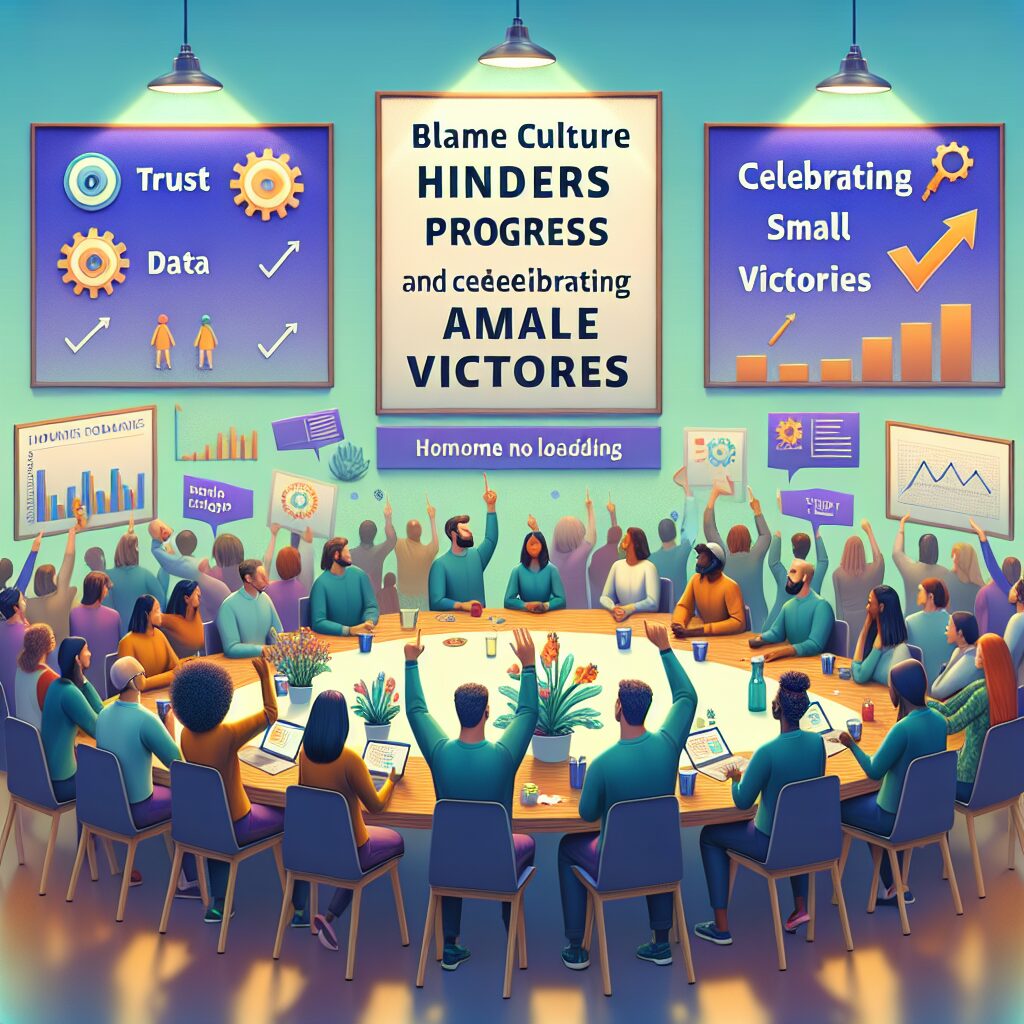
- Build Trust Through Open Dialogue: Open conversations create a safe space for people to express their thoughts. When team members feel comfortable sharing without fear of backlash, real change can take root.
- Use Data to Demonstrate the Benefits of Change: Numbers don’t lie. When you present clear, tangible benefits supported by data, it’s hard for anyone to argue against the merits of change. People are more likely to invest in something they can see the value in.
- Celebrate Small Wins: Progress is often a series of small victories. Recognising and celebrating these wins can create positive momentum, encouraging people to join in on the journey of continuous improvement.
Each of these strategies invites a sense of accountability rather than blame. When leaders and teams feel safe to engage and share, transformation becomes not just a possibility but a reality.
The Importance of Culture in Leadership
When I reflect on my journey in leadership, one moment stands out. During a particularly challenging project, I made a mistake that could have cost us dearly. Instead of hiding from it, I chose to be transparent about it during a team meeting. To my surprise, my team responded with understanding rather than criticism. From that day forward, it became clear that embracing vulnerability could foster trust and collaboration.
So, what can leaders do to further dismantle blame culture? Here are a few additional ideas:
- Encourage feedback from all levels, not just the top-down approach.
- Lead by example—show your team that it’s okay to admit mistakes.
- Invest in training that focuses on emotional intelligence and resilience.
In a world that often celebrates perfection, let’s champion progress over perfection. Let’s shift our focus from what went wrong to what we can learn and how we can improve as a team.
Shifting Mindsets for a Better Future
We have the power to change the narrative. By cultivating a culture of accountability and growth, we can begin to break this damaging cycle. Remember, it’s not about perfection; it’s about progress.
So, what strategies have you found effective in fostering a culture of accountability in your organisation? I’d love to hear your thoughts!
Let’s make a conscious effort to dismantle blame culture, one conversation at a time. Together, we can create an environment where innovation thrives and mistakes are merely stepping stones towards success.